
My experience with lipoedema and exercise
I only discovered that I have lipoedema within the last 12 months, so it’s still fairly new information to me. That discovery answered a lot of long-standing questions about my body – particularly the size and shape of my legs, their sensitivity, and the fact that no matter what I’ve done over the years, they’ve never really followed the ‘rules’ when it comes to weight loss.
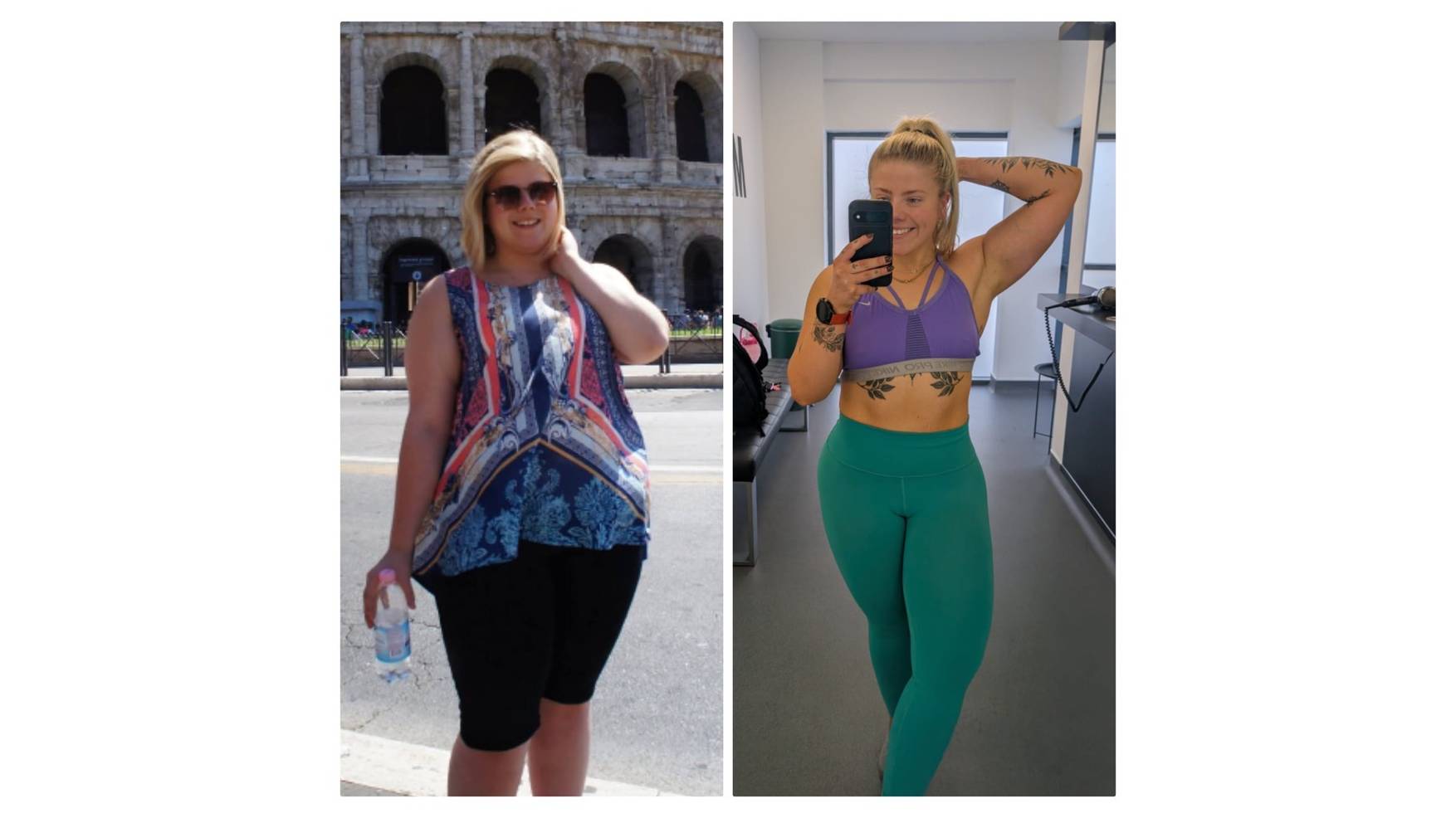
I started going to the gym when I was 21 because I was extremely overweight. There was nothing glamorous or aspirational about it at the time. I was uncomfortable, unhappy, and very aware that something needed to change. Exercise wasn’t about performance, longevity, or loving my body. It was about needing to lose weight and feel like myself again.
Through consistent training, I lost around five stone.
Since then, my weight has gone up and down by about a stone at different points in my life. Which, as it turns out, is fairly normal human behaviour! Overall though, I’ve stayed relatively stable at around 11½ stone and roughly 30 per cent body fat.
One thing that has never really changed is my legs. Even when I lost a significant amount of weight, their size and shape barely shifted. At the time, that was frustrating and confusing.
Discovering lipoedema later on helped everything click into place. Instead of constantly wondering what I was ‘doing wrong’, I finally had an explanation… and honestly, that was more relieving than anything else.
In terms of symptoms, I know I’m quite fortunate. I experience very minimal pain, mostly around my ankles, and my legs are quite sensitive to touch. Beyond that, lipoedema hasn’t had a major impact on my day-to-day life. I don’t struggle with mobility, I don’t deal with widespread pain, and even when I’ve had surgery for unrelated reasons, I’ve recovered well with no lasting effects. I’m very aware that this isn’t everyone’s experience, and I don’t take that for granted.
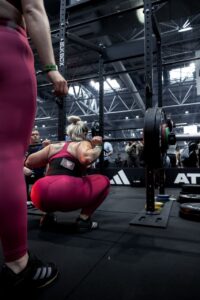
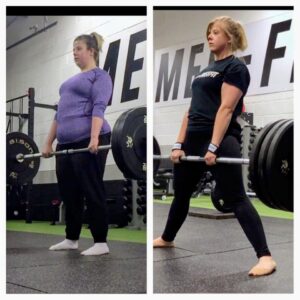
I’ve now been training consistently for almost 10 years. While I didn’t start exercising with lipoedema in mind (I didn’t even know it was a thing), I do believe that long-term, sensible strength training has supported how well my body functions. Lifting weights has helped me build muscle, feel stable through my joints, and move through life feeling capable rather than fragile.
My training approach has never been extreme. I’ve never been interested in punishing workouts or chasing perfection.
Consistency has mattered far more than intensity. I haven’t trained flawlessly, and I’ve definitely had phases where life got busy and training took a back seat, but I’ve always come back to it. That long-term relationship with exercise is probably one of the biggest reasons it’s been so beneficial for me.
My goals have changed a lot over time, too. Weight loss isn’t the focus anymore. These days, my priorities are strength, maintaining muscle mass, and improving performance. I train for fitness competitions, and my ability to lift heavy things, move well, and perform under pressure matter far more to me than the number on the scales… or whether my legs ever decide to cooperate aesthetically.
Diet likely plays a role in how I feel as well. I tend to eat in a fairly structured way and often use intermittent fasting, simply because it suits my lifestyle. I also have polycystic ovary syndrome (PCOS), and there’s increasing awareness of the overlap between the two different conditions of PCOS and lipoedema. I don’t claim to have cracked some magic formula, but research has helped me make more informed, less stressful choices about food and training.
Professionally, I’m a personal trainer, but I don’t coach people because they have lipoedema or any other condition. I coach people. All with different bodies, backgrounds, and challenges. That perspective has only reinforced what my own experience has taught me: bodies are individual, unpredictable, and far more interesting than any textbook definition.
If there’s one thing I’d like people to take from my experience, it’s that lipoedema doesn’t automatically write your life story for you. My experience isn’t a blueprint, and it certainly isn’t a comparison point. It’s just one version of how things can look.
For me, exercise isn’t a cure or a fix. It’s a tool… one that helps me feel strong, capable, and confident in my body. And if nothing else, it’s taught me that sometimes your body isn’t being difficult – it’s just doing things its own way.

By Emily Smith


